Skip to content
Travel247

Planning a trip from Ireland, start to finish

Travel247 is a reference for people organising trips from Ireland: where to go on the island itself, how to reach the places that take more than one flight, and what actually changes once you are on the ground. Pages here are written to be read once and used, rather than skimmed.

Recommendations are checked against a primary source before publication, and every page carries the date of its last review. Where something is genuinely uncertain, such as an opening season, a licence or a route that closes over winter, the page says so rather than guessing.

A sea cliff on the Irish Atlantic coast with nesting seabirds and sea thrift in the foreground
Plate IThe western seaboard, where most Irish trips end up.

Plate IWhere to start in Ireland

One decision matters more than any other, and it comes before dates or budget: whether the trip follows the coast or the interior. The two produce completely different weeks.

The Wild Atlantic Way runs down the western seaboard from Malin Head in Donegal to Kinsale in County Cork, and it is usually given as roughly 2,500 kilometres. It is less a road than a waymarked sequence of them, which means it can be joined and left at almost any point. Most people who try to drive the whole thing inside a week end up seeing a great deal of the inside of a car. A more realistic plan takes one or two stretches, Connemara and Mayo for instance, or the Dingle and Iveragh peninsulas, and gives each of them several days.

Individual stops along it vary far more than a single route name suggests. The Burren in County Clare is a limestone pavement with an alpine and Mediterranean flora that has no equivalent elsewhere in the country. Connemara is bog, quartzite and lakes, with Kylemore Abbey as its most photographed building. Slieve League in Donegal has sea cliffs several times the height of the better-known Cliffs of Moher and a fraction of the visitors. The Aran Islands sit off Galway Bay and are reached by ferry from Rossaveal or, in season, Doolin; Inis Mór is the largest and busiest, Inis Meáin the quietest.

Ireland's Ancient East covers the opposite side of the country and rewards a slower, shorter itinerary. Newgrange in the Boyne Valley predates the pyramids at Giza, and the passage tomb's alignment with the winter solstice sunrise is the reason it draws the attention it does; access to the chamber is by guided tour from the visitor centre rather than directly from the site. Glendalough in Wicklow, the Rock of Cashel in Tipperary and Kilkenny's medieval core sit within easy reach of one another and of Dublin. Ireland's Hidden Heartlands is the least travelled of the three, built around the Shannon and the midlands, and it is where accommodation is easiest to find at short notice in July and August.

Two practical points come up repeatedly and are worth settling before booking anything.

The first is driving. Traffic keeps to the left, rural roads are frequently narrower than visitors expect, and the R-classified roads that carry most of the scenic routes can reduce to a single usable lane with passing places. Automatic transmission hire cars are less common in Ireland than in North America and cost noticeably more, so they need booking well ahead rather than picked up on arrival.

The second is a matter of definition. "Ireland" is used on this site to mean the island. Six counties in the north-east form Northern Ireland and are part of the United Kingdom, which matters for currency, mobile roaming and occasionally for car hire terms. The Giant's Causeway and the Causeway Coast are in that jurisdiction; the Cliffs of Moher and the Ring of Kerry are not. Nothing about the border interrupts a drive, but it does interrupt a phone contract.

The full Ireland guide works through each route in turn, and beautiful places to visit in Ireland is the shorter picture-led version.

Plate IIBeyond Ireland

Long-haul routes out of Dublin, Shannon and Cork have changed considerably over the past decade, and a destination that once meant two connections may now mean one. That single fact reshapes which holidays are realistic on a fortnight's leave.

Dublin has one genuine structural advantage for anyone travelling to the United States, and it is easy to overlook when comparing fares. United States border preclearance operates there, and at Shannon, which means immigration and customs are completed before departure rather than on arrival. For a connecting itinerary inside the US, that removes the single most common cause of a missed onward flight.

Fig. 1

Southern India and Kerala

One of the better-value long-haul options for a first trip outside Europe. Kerala concentrates a great deal into a small area: the backwaters around Alleppey, the tea country at Munnar and the coastline south of Kochi are within a few hours of one another, so a single trip does not have to be built around internal flights.

Usable window roughly October to March, set by the monsoon rather than the heat.

Fig. 2

Fiji

The other extreme of effort. There is no short way to reach it from Ireland, and the trip only makes sense if the stay is long enough to justify the journey. What it returns is a set of islands that vary far more than the brochures suggest, from the developed Mamanucas within an hour of Nadi to the almost undeveloped Lau group.

Genuine dry season May to October.

Fig. 3

The Caribbean

The most seasonal of the three. Travel insurance terms are worth reading in full rather than accepting at checkout, particularly the wording on trip interruption.

Hurricane season officially runs June to November.

Fig. 4

East and southern Africa

A different logic again, because the season is set by wildlife rather than by weather comfort. Dry-season months concentrate animals around water and make viewing easier, while the green season brings lower prices, better birding and heavier ground conditions.

Season chosen by what you want to see, not by comfort.

Fig. 5

Australia

Inverts the European calendar entirely, which makes the Irish winter its most attractive window and the Irish summer its least.

Best reached from Ireland with a deliberate stopover rather than straight through.

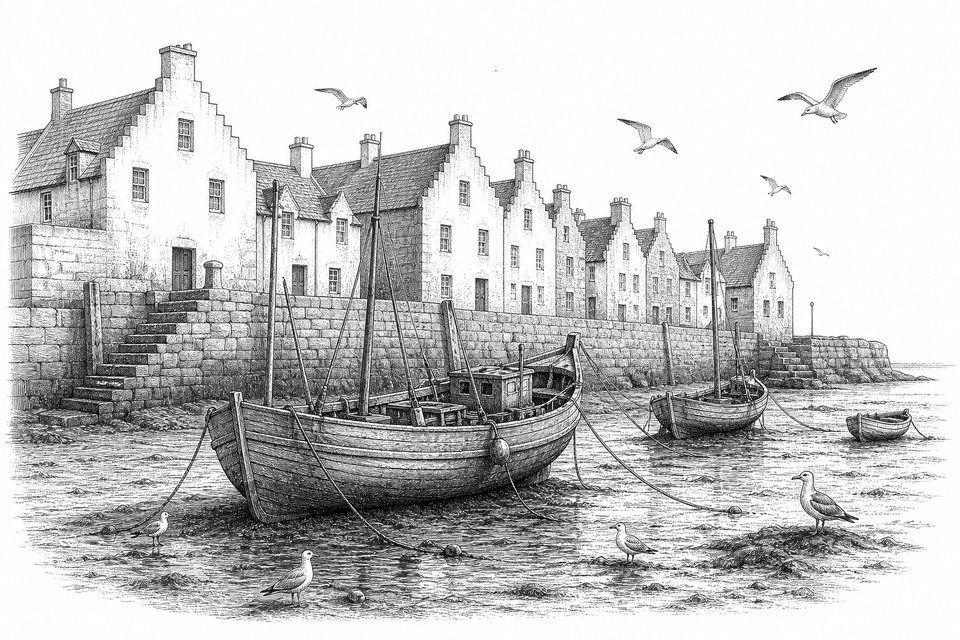
A stone quay at low tide with fishing boats, gable-fronted houses behind and gulls
Plate IIIA working harbour town, which is what most of the coast actually is.

Plate IIIGetting there, and getting back

Most of the difficulty in a long trip is concentrated in two places: the flight itself, and the twenty-four hours after landing.

On the flight, the variables that actually change how the journey feels are seat position, hydration and when sleep is attempted, and only the first of those is decided at booking. An aisle seat on a night sector is worth more than a marginally better airline. Compression socks matter more on the second long leg than the first. Cabin air is drier than almost any indoor environment on the ground, which is why alcohol and coffee cost more in comfort at altitude than they do at sea level.

Afterwards, the adjustment is largely a question of light rather than sleep. Arriving in the morning and staying outside until early evening resets a body clock faster than any amount of lying down in a hotel room, and eastward travel is consistently harder than westward across the same number of time zones. Anything under about three hours of difference tends to resolve itself within a day and does not need managing at all.

The phrase jet setter is used loosely now, and its original meaning was narrower. It described the small group who could afford intercontinental jet travel when it first became commercially available at the end of the 1950s, rather than anyone who simply flies often. The term carried a social meaning as much as a travel one, and that is most of the reason it has aged the way it has.

How to stay comfortable during a long flight covers the first half in detail, and the jet-setter lifestyle covers where the term came from.

Plate IVGaming venues and nights out

Ireland's gaming venues are frequently described as casinos, and the description is not quite accurate. Under long-standing Irish gaming law they have generally operated as private members' clubs rather than as licensed casinos, which is why membership, and sometimes a waiting period, comes before entry. The Gambling Regulation Act 2024 established a statutory regulator and began moving the sector onto a licensing footing. The current state of that rollout is given on the venue pages themselves rather than summarised here, because it has been changing.

For a visitor the practical consequence is straightforward: check the membership terms before travelling to a venue, and expect them to differ between Dublin, Cork and Galway.

Content in this section is written for adults aged 18 or over.

Casinos in Ireland is the main guide, with venue pages for Dublin and Cork, and a separate look at playing online from Ireland.

Plate VWhen to go, and when not to

Ireland's temperature barely moves across the year, which sounds like it should make timing easy and does the opposite. What actually varies is daylight, crowding and how much is open, and those three do not peak together.

June has the longest days by a wide margin. In the far northwest the light holds until around eleven at night, which effectively adds a day to a week and is the single strongest argument for early summer. July and August have almost the same light with considerably more traffic, higher accommodation prices and full car parks at the well-known stops.

September is the compromise most people should take. Sea temperatures peak, the coastal crowds thin out once the Irish school holidays end, and most seasonal operations are still running. May is its mirror image at the other end: quieter and cheaper, with slightly less open.

October to March is the honest off-season, and it is honest in both directions. Days are short, island ferries reduce or stop, smaller visitor centres close and the weather on exposed headlands is genuinely rough. In exchange the landscape is at its most dramatic and largely empty, and the eastern half of the country, where the attractions are ticketed and indoor-adjacent, barely notices the difference.

For the long-haul destinations the calculation inverts. The Irish winter is exactly when Australia and the Caribbean are at their best, and the Irish summer is when Kerala and Fiji are at their worst. A year planned properly uses the west coast between May and September and goes long-haul in the months when staying here is least rewarding.

One further timing note that catches people booking from abroad. Ireland effectively has two bank-holiday patterns, and the long weekends in June, August and October fill coastal accommodation faster than any other dates outside high summer. Northern Ireland keeps a different set again, which matters if a route crosses the border. A midweek arrival is consistently easier to book and consistently cheaper than a Friday one, and on the west coast the difference is not marginal.

Ferries to the islands are the other thing that moves with the calendar, running to a reduced timetable outside the summer months and stopping altogether in rough weather at any time of year.

The other thing worth knowing is that the shoulder weeks either side of the school holidays behave very differently from the holidays themselves. The last week of August and the first week of September can feel like two different countries on the same stretch of coast. Prices move with it, and so does the chance of getting a table without booking.

On rain, which is the question everyone actually asks: it falls often and rarely for long. The useful planning assumption is not a dry week but a wet hour in most days. That is a packing decision rather than an itinerary one, and it argues for waterproofs and boots over an umbrella, which the wind will take from you on the first headland.
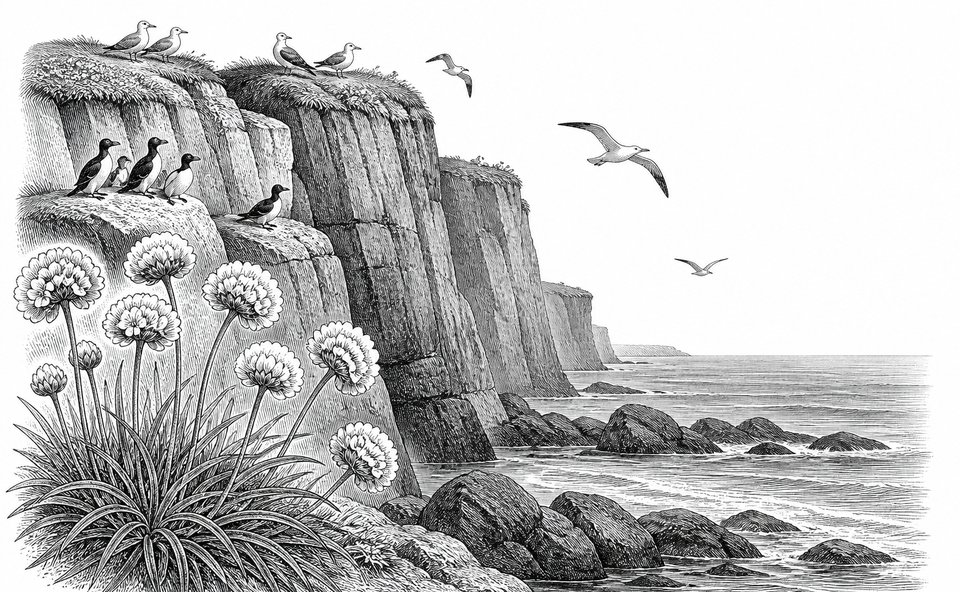
Plate VIHow this site works

Travel247 publishes under named editorial bylines, and each page shows who reviewed it and when. Claims that go out of date, such as opening seasons, licence status or route availability, carry a review date rather than being written as though permanent.

Where a page links to a commercial operator, that is stated on the page. Nothing on this site is ranked by payment, and no operator has any influence over the order in which venues or destinations appear.

About Travel247 and its editorial standards

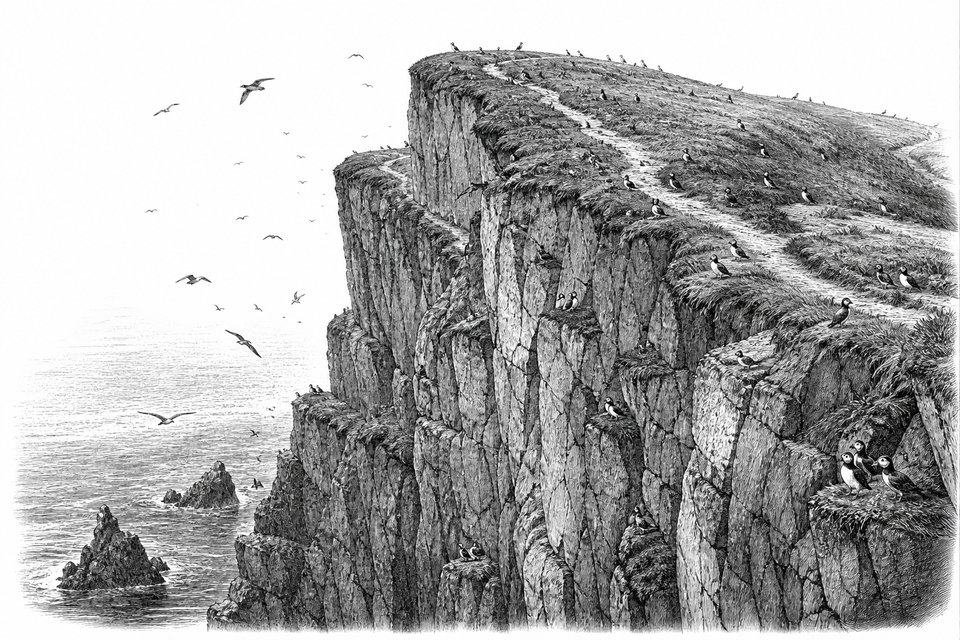
A high sea cliff with a seabird colony and a narrow footpath along the top edge
Plate VIISlieve League in Donegal, higher and emptier than the Cliffs of Moher.

Common questions

When is the best time to visit Ireland?

May, June and September give the longest daylight relative to crowd levels. July and August are the busiest and most expensive months, particularly along the west coast, and October to March brings short days with many rural attractions on reduced hours or closed entirely.

Is a car necessary?

For Dublin, Galway city or Cork city, no. For the Wild Atlantic Way, the Burren or most of Connemara, effectively yes, because public transport does not serve the coastal routes at useful frequencies.

Do I need a different currency in Northern Ireland?

Yes. The Republic uses the euro and Northern Ireland uses pounds sterling. Cards are accepted widely in both, but a cash reserve in the wrong currency is a common annoyance.

How far ahead should long-haul flights be booked?

For peak-season Asian and Pacific routes out of Dublin, several months. The binding constraint is usually connection quality rather than fare, because the good connections sell out before the cheap ones do.

Does it rain constantly?

It rains often and rarely for long. The useful planning assumption is not a dry week but a wet hour in most days, which is a packing decision rather than an itinerary one.

Are Irish gaming venues open to visitors?

Generally on a membership basis rather than to walk-in customers. Terms differ by venue and are listed on each venue page.