Destinations · Fiji · Last reviewed 11 September 2026
Fiji from Ireland: when to go, which islands, and how long to stay
Fiji is the furthest destination from Ireland that a normal amount of annual leave can reach, and everything worth saying about planning a trip there follows from that. Two connections, most of two days in transit each way, and no short version that works.
What it returns for that is an archipelago of over three hundred islands in the South Pacific Ocean, roughly a third of them inhabited, which vary far more than the marketing photographs suggest. The difference between a resort island forty minutes from the airport and a village on a volcanic island in the north is not a difference of degree.
Section 1When to go
The dry season runs approximately May to October, with July and August the driest and, by Fijian standards, the coolest. This is the window most trips should target.
November to April is the wet season, and it is also the cyclone season. Those are two separate facts and the second is the one that matters for planning. Rain in the tropics is usually an afternoon rather than a day; a cyclone is a cancelled fortnight. Travel insurance wording on named storms is worth reading in full if the trip falls in that window, not skimming at checkout.
The shoulder months at either end, May and October, are the value proposition. Prices drop, the resorts are quieter and the weather is still overwhelmingly usable. From Ireland this also means avoiding the school-holiday fare peak at both ends of the journey.
Water temperature is not a variable in any meaningful sense. It sits in the high twenties year-round, which removes one of the calculations a Mediterranean trip requires.
Section 2Which islands
Almost all international arrivals land at Nadi, on the western side of Viti Levu. Where you go from there is the real decision of the trip.
The Mamanucas
The closest island group to Nadi, reached by catamaran in well under an hour. The most developed and the most convenient, with the widest range of resorts from backpacker to expensive. If the priority is minimising transfer time after a 30-hour journey, this is the answer.
Convenience over seclusion.
The Yasawas
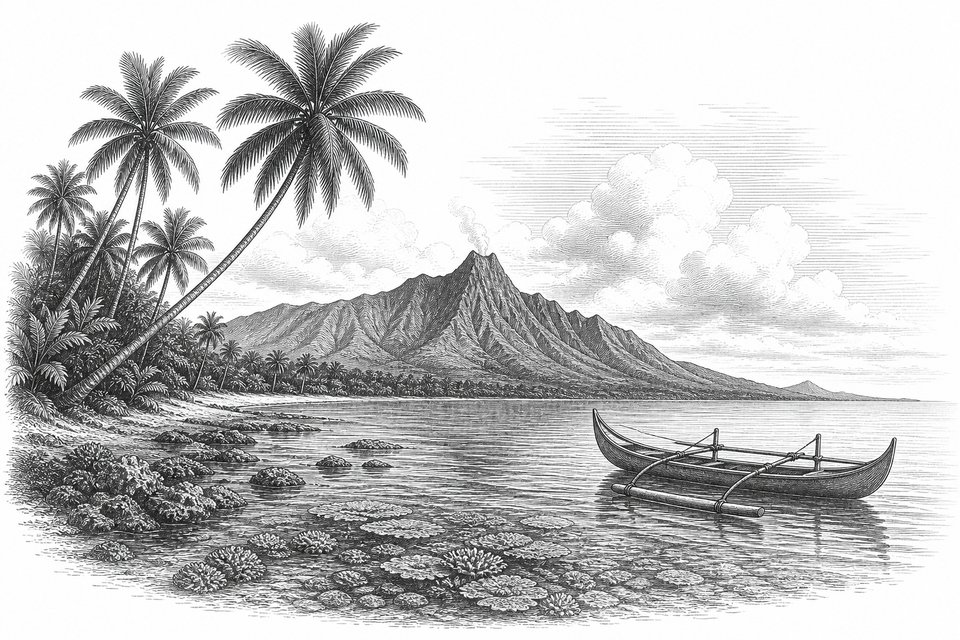
A chain running north from the Mamanucas, less developed and more dramatic, with the volcanic ridgelines that appear in most photographs of Fiji. The catamaran continues up the chain, so transfers are longer but straightforward.
The scenery is here. Budget half a day to reach the far end.
The Coral Coast, Viti Levu
The southern shore of Viti Levu, reachable by road from Nadi. The option for anyone who would rather drive, see villages and towns, and not spend the trip on boats. Less postcard, considerably more country.
No transfers at all, which is worth more than it sounds.
Taveuni and the north
The third-largest island, known as the Garden Island, and the anchor for diving in Fiji. The Rainbow Reef and the Great White Wall are the names to know. Requires an internal flight and repays a longer stay.
Only if the trip is built around diving or rainforest.
Kadavu and the Lau group
The remote end. Kadavu sits on the Great Astrolabe Reef; the Lau group in the east is among the least visited inhabited territory in the Pacific. Both need effort, time and a tolerance for limited infrastructure.
A second or third visit, not a first.
Section 3How long, and how many bases
A fortnight is the working minimum. Ten days is possible and leaves the trip feeling like an airport with a beach attached; anything shorter is not worth the journey.
The mistake specific to Fiji is over-hopping. Every internal transfer, whether boat or plane, costs roughly half a day once you account for checkout times, waiting and the journey itself. Three islands across a fortnight means three half-days spent moving, plus the two travel days at either end, which is a fifth of the holiday.
Two bases is the comfortable maximum for two weeks, and one base plus day trips is a perfectly good structure that nobody suggests because it does not photograph as an itinerary. A common and sensible pattern is a night near Nadi on arrival, to absorb the journey, then a single island for the rest.
Section 4On the ground
Fiji is one of the more straightforward long-haul destinations to travel in. English is widely spoken and is an official language, the currency is the Fijian dollar, and the tourism infrastructure on the western side of Viti Levu is well established.
Village etiquette is the part worth preparing for, because it is genuinely different and because getting it wrong is noticed. Cover shoulders and knees when visiting a village. Remove hats and sunglasses. Do not touch anyone's head, which is considered sacred. The customary arrival is a sevusevu, the presentation of kava root to the village head; any resort or guide will arrange this properly, and improvising it is worse than asking.
Kava itself is a mildly sedative drink made from the root, served in a communal bowl with a set of conventions about clapping and drinking that will be explained on the spot. It is not alcohol and it is not a tourist performance; it is how a great deal of ordinary social life is conducted.
Sunday is observed seriously in much of the country, particularly in villages, and that affects what is open and what is appropriate. Church singing on a Sunday morning is, for many visitors, the thing they remember longest from the trip, and it is not a performance laid on for anyone.
English is an official language and is spoken almost everywhere, which removes a friction most long-haul destinations have. Fijian and Fiji Hindi are both widely used, and the greeting bula is used constantly and genuinely rather than as a tourism slogan, which takes a day or two to stop feeling odd.
Driving is on the left, which is one fewer adjustment for anyone arriving from Ireland. Currency is the Fijian dollar, cards are accepted at resorts and considerably less so in villages and on smaller islands, and carrying some cash for the latter is the practical habit. Tipping is not traditional and is not expected. Some resorts run a staff fund instead, which is the appropriate route if you want to leave something.
Two smaller practicalities. Fiji sits thirteen hours ahead of Irish time in winter and twelve in summer, which is close enough to a full inversion that the jet lag is genuinely severe in both directions and needs the first day planned around it rather than filled. And the sun is stronger than the temperature suggests; the reef reflects, and the burn that ruins a week almost always happens on day one in the water rather than on a beach.
Section 5Getting about, and what it costs
Internal transport is the part of a Fiji trip that most affects both budget and time, and it splits cleanly into three tiers.
Catamaran is the workhorse for the Mamanucas and Yasawas. A scheduled service runs up the island chain from Denarau near Nadi, stopping at resorts along the way, and it is the cheapest and most sociable way to move. It is also slow the further north you go, which is why the far Yasawas cost half a day rather than an hour.
Internal flights connect Viti Levu to the larger outer islands, including Taveuni and Vanua Levu. They save most of a day over the alternatives and they are the only practical option for the north. Baggage limits on the smaller aircraft are tighter than international allowances, which catches people out.
Road covers Viti Levu. The Coral Coast is a straightforward drive from Nadi, and buses run the route cheaply. Renting a car is worthwhile only if the plan genuinely involves the main island; for a resort-and-island trip it is money spent on a vehicle sitting in a car park.
On cost generally, Fiji is not a budget destination once you are on an island, because resorts are effectively closed economies and you will be eating where you sleep. The main island is considerably cheaper, which is one of the underrated arguments for the Coral Coast over a resort transfer. Budget for the transfers themselves as a real line rather than an afterthought; on a two-base fortnight they are not trivial.
Section 6Is it worth the journey from Ireland
Honestly, only under conditions. Fiji is a fortnight-minimum destination reached by two connections, and there are closer places with warm water and good beaches.
What it has that they do not is a landscape and a culture that is not a variation on anything European, and a genuine off-the-map option at the far end of the island chain for anyone willing to go looking for it. If the appeal is a beach, the Canaries are four hours away. If the appeal is being somewhere entirely unlike home, that is what the thirty hours buy.
For the comparison against the other long-haul options reachable from Dublin, see exotic holiday destinations. For the flying itself, which is the part of this trip that needs the most preparation, see how to stay comfortable during a long flight.
Common questions
How long does it take to reach Fiji from Ireland?
Two connections and somewhere between 26 and 34 hours door to door, depending on routing. There is no one-stop option from Dublin, which is the single fact that should shape the length of the trip.
When is the dry season in Fiji?
Roughly May to October, with July and August the driest and coolest. November to April is the wet season and also the cyclone season, which is a separate consideration from rainfall and matters for insurance.
Which island group should a first visit choose?
The Mamanucas for convenience and short transfers, the Yasawas for scenery and quieter resorts, the Coral Coast on the main island if you want to drive and see villages rather than fly between resorts. Taveuni if the trip is built around diving.
Do you need to island-hop?
No, and a first trip usually should not. Each internal transfer costs half a day. Two bases across a fortnight is a comfortable maximum; three is a logistics exercise.
What should you know about visiting a village?
Cover shoulders and knees, remove hats and sunglasses, and do not touch anyone’s head. A sevusevu, the presentation of kava to the village head, is the customary way to arrive. Any resort or guide will arrange it properly rather than leaving you to improvise.