Travel language · Last reviewed 11 September 2026
Jet setter meaning: what is a jetsetter, and the lifestyle
A phrase coined in 1958, for a group that had stopped existing by the time it was popular.
The jetsetter meaning most people want is the short one: a jetsetter is someone who travels frequently, expensively and to fashionable places. That definition is correct for how the word is used now, and it is also a considerable flattening of what it originally described.
The fuller jet setter meaning is narrower than that, and it is worth having. The phrase was not coined to mean "travels a lot". It named a specific group of people at a specific moment, and the moment lasted about fifteen years. Understanding that is the difference between using the word and knowing what you are saying with it.
Section 1Jet setter meaning: where the phrase came from
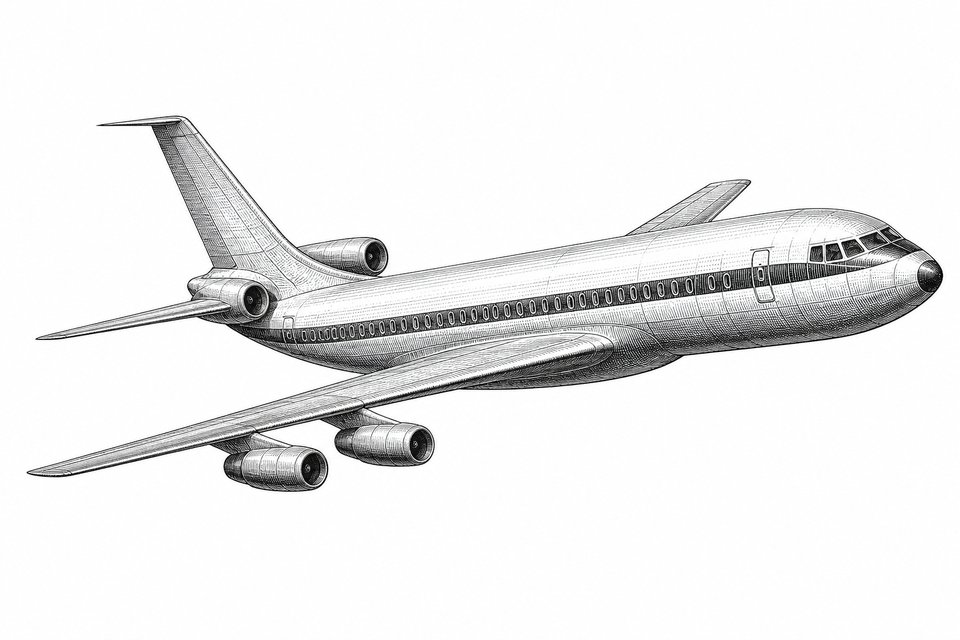
The phrase appeared in the late 1950s, at the point where commercial jet aircraft made intercontinental travel a matter of hours rather than a serious undertaking. The Boeing 707 entered scheduled transatlantic service in 1958, and within a very short time the geography of a wealthy social life changed shape.
The coinage is usually credited to the gossip columnist Igor Cassini, who wrote as Cholly Knickerbocker, though as with most such attributions the phrase was probably in the air before anyone printed it. What is clear is what it replaced. The previous term was café society, which had described a similar set in the 1930s and 1940s: wealthy, visible, and organised around a handful of restaurants and nightclubs in a few cities. Café society could be reached by ocean liner and train. The jet set could not, because the jet set was defined by moving faster than that.
That is the part the modern usage loses, and it is why the short jet setter meaning is unsatisfying. A jetsetter was not simply rich, and not simply well travelled. A jetsetter was someone for whom a four-hour flight had replaced a four-day crossing, and who reorganised their year accordingly.
Section 2What is a jet setter, precisely
The original jet setting lifestyle had a structure, and the structure is what made it recognisable enough to name. It ran on a seasonal circuit. Winter meant the Alps, and in practice a small number of resorts. Late winter and early spring meant the Caribbean. Summer meant the Mediterranean coast and the islands. Autumn meant a return to the cities.
Asking what is a jet setter in that period is really asking who could keep that calendar. The circuit was not a holiday pattern; it was a residence pattern. People did not travel to these places so much as move between them, and the same faces appeared in each. That is why the group could be written about as a set at all. A gossip columnist could reasonably expect the readership to know who was in Gstaad in January, because the answer was roughly the same people every January.
Jet travel is what made this possible, and the arithmetic is worth stating plainly. Before it, crossing the Atlantic took the better part of a week each way, which put a hard floor on how often anyone could do it. Afterwards it took a working day. A pattern of life that had been available only to people with unlimited time became available to people with money, which is a much larger group, and the word arrived to describe them.
The word carried a judgement as well as a description. To call someone a jetsetter in 1962 was not neutral. It implied a life of visible leisure, and depending on the writer it implied that the leisure was slightly ridiculous. That edge has almost entirely worn off.
One more distinction is worth drawing, because it is the one that separates the historical jet setters from the people the word is used for today. The original set was not defined by working elsewhere. Nobody in it was commuting. The whole point was that the travel was the life rather than a cost of it, which is precisely the opposite of the modern frequent flyer the term is now most often applied to.
Section 3What jet setters and the jet-setting lifestyle mean now
The group stopped being a set for a straightforward reason: aviation succeeded. The wide-body aircraft of the 1970s, and the fare structures that followed them, turned intercontinental flight from an expensive novelty into ordinary transport. Once a very large number of people could fly to the same places, being one of them stopped distinguishing anyone.
What survived was the adjective. The jet setting lifestyle now attaches to a manner rather than to a group, which is why current usage is so elastic. It can mean a consultant on a punishing travel schedule, a well-photographed holiday, or nothing more precise than "goes somewhere nice fairly often". None of those is wrong, and none of them is the original meaning.
Ask what is a jet setter today and the answer is a description of frequency, not of class. That is the whole distance the jetsetter meaning has travelled since 1958.
The word is also now used almost entirely in a positive register, usually by marketing. The faint mockery it carried has gone, because the thing it mocked, conspicuous leisure in a small visible class, has been replaced by something much more diffuse.
Section 4The places the jet set actually went
The circuit was narrow, and knowing the actual place names makes the jet setter meaning much more concrete than any definition of jet setters can. A handful of resorts absorbed almost all of it.
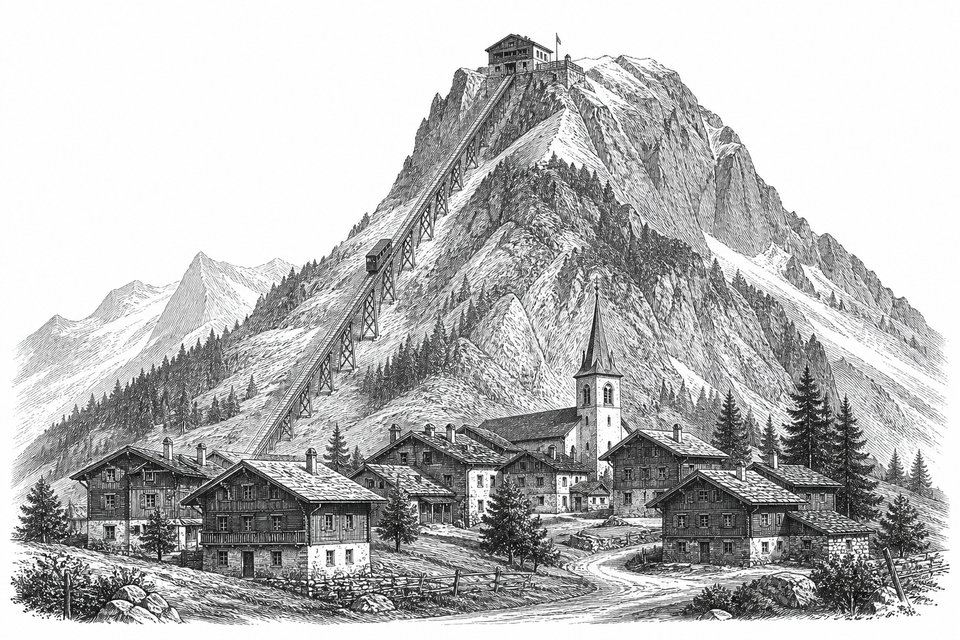
In winter it was the Swiss and Austrian Alps, and within that mainly Gstaad and St Moritz. St Moritz had been a winter resort since the 1860s and already had the infrastructure; what jet travel added was Americans. Klosters ran a quieter version of the same thing.
The Mediterranean summer was more spread out but still concentrated. The French Riviera around Cannes and Saint-Tropez carried the largest share, with Monte Carlo attached to it. Capri and the Amalfi coast took the Italian end. From the early 1960s the Costa Smeralda in Sardinia was developed specifically for this market, which is unusual: most jet-set destinations were existing resorts that the jet set arrived at, while that one was built for them.
Acapulco held the winter Pacific position for North Americans, and Marbella on the Spanish coast grew into the role over the same decade. Nassau and later Barbados took the Caribbean.
Two things stand out looking at that list now. The first is how few places there were. A social phenomenon that reshaped the vocabulary of travel operated across perhaps a dozen towns. The second is that most of them are still expensive and most are no longer exclusive, because the same aviation economics that created the circuit eventually opened it. St Moritz and Saint-Tropez did not decline; they simply filled up.
The modern equivalent, if there is one, is not a place at all. It is a set of flight routes, which is the subject of how the destinations on this site connect to Ireland.
Section 5Jetsetter, jet setter or jet-setter
All three spellings are in circulation and none of them is an error. The compound has followed the ordinary English pattern of closing up over time: two words, then hyphenated, then a single word. Dictionaries tend to lead that process, so the closed form jetsetter and the hyphenated jet-setter are the forms you will find in reference works, while the open jet setter is the most common in everyday writing.
One usage note worth having: the term is now almost always applied by someone else rather than claimed. Very few people describe themselves as a jetsetter, and the ones who do are generally not what the word originally meant.
The noun for the activity behaves the same way. Jet-setting is the safest written form, with the hyphen doing useful work in a sentence where the two words could otherwise be read separately.
Section 6The Irish end of it
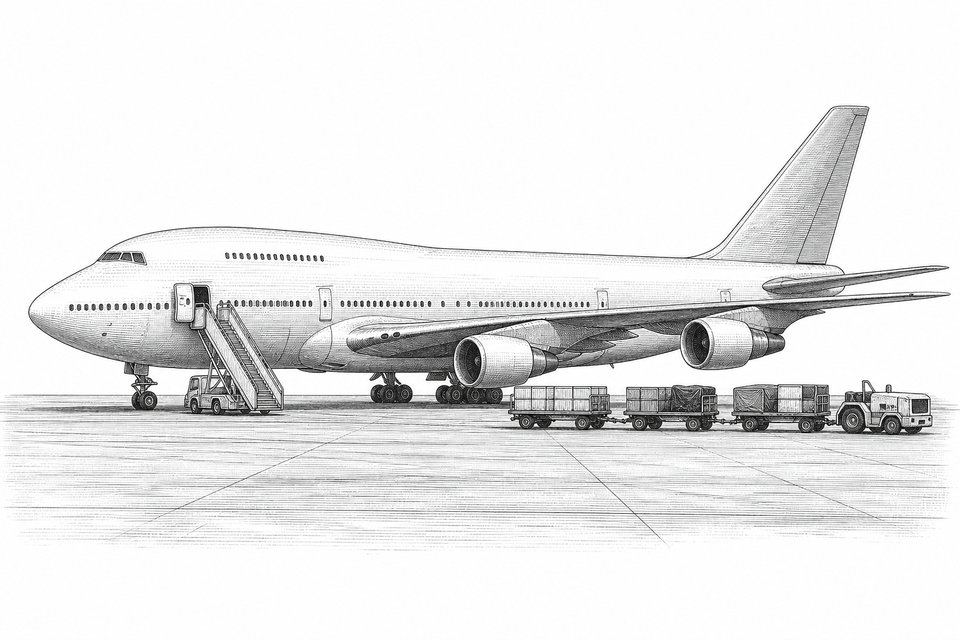
Ireland has a small but real place in this history, and it is not the one people expect. Shannon Airport in County Clare was for years a mandatory refuelling stop on the North Atlantic route, because early transatlantic aircraft could not reliably make the crossing without one. That gave an airfield in the west of Ireland a passenger list wildly out of proportion to its surroundings.
Two things came out of that. The world's first airport duty-free shop opened at Shannon in 1947, which is a genuinely consequential piece of aviation retail history. And Irish coffee is generally credited to the same airport, invented for cold, tired passengers waiting out a stop in the 1940s.
The jet aircraft that created the jet set is also what ended Shannon's role, since the 707 and its successors could cross without stopping. The airport that had been an unavoidable waypoint became optional almost overnight. It is a neat illustration of the same technology creating a social phenomenon at one end of a route and removing a town's reason for existing at the other.
Shannon does retain one modern advantage worth knowing about, covered in getting there and getting back: it is one of the two Irish airports with United States border preclearance, so passengers clear US immigration before departure rather than on arrival.
Common questions
What is the meaning of jet setter?
A jet setter was originally a member of a small, wealthy international social group who used the first commercial jet airliners to move between fashionable places by season. In current use the word has broadened to mean anyone who travels frequently and stylishly, which is looser than the original sense.
What is a jet setter today?
Usually just a frequent traveller. Because air travel stopped being exclusive, the word lost the social meaning that made it specific and became a description of habit rather than of class.
Is it jet setter, jetsetter or jet-setter?
All three are in use. Dictionaries generally prefer the closed form jetsetter or the hyphenated jet-setter, while the two-word jet setter is the most common spelling in casual writing.
When did the term jet set start?
In the late 1950s, alongside the first commercial jet services. It replaced an older phrase, café society, which had described a similar group in the era before jet travel.
What is the jet-setting lifestyle?
Historically it meant following a seasonal circuit of resorts and cities rather than taking holidays. The modern version described by the phrase is far less structured and mostly means travelling often.