Gaming venues · Cork · 18+ · Last reviewed 11 September 2026
Casinos in Cork: the verified members' club in the city centre
Cork has one table-gaming venue that could be verified for this page, and it sits on the quay in the middle of the city. Like every such venue in Ireland it is a private members' club rather than a licensed casino, so joining comes before playing.
That single-venue picture is normal outside Dublin rather than a sign of decline. Ireland never developed a casino sector, for reasons set out on casinos in Ireland, and what exists is concentrated in the two largest cities.
Section 1The club
Macau Sporting Club
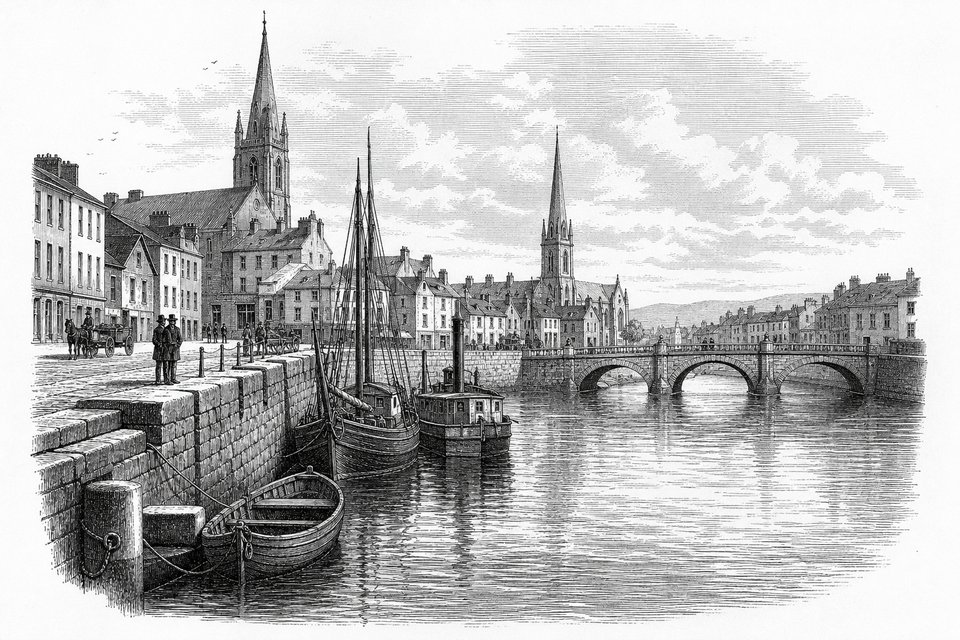
On St Patrick's Quay, on the north channel of the Lee. Offers both club membership and a separate online membership.
Address: 16 St Patrick's Quay, Cork City
Phone: +353 21 453 0477
Tables: Casino tables, Poker, Group nights
Entry: Membership required, 18+
Venue website · verified 2026-10-15
The Macau Sporting Club has been on the quay long enough to be a fixture rather than a venture, which matters more in a single-club city than it would in Dublin: continuity is the only thing standing between Cork having a card room and Cork having none. It runs casino tables and poker, and it markets group and corporate nights alongside ordinary play, which tells you something about how a single-club city works: the room has to serve several purposes rather than specialising.
It offers a separate online membership as well as club membership. Those are different things and it is worth being clear which one you are signing up for if you intend to walk through the door.
Section 2Getting there
The quay runs along the north channel of the River Lee. From the main shopping spine of the city it is a walk of a few minutes across the bridge. From Kent Station it is a similar distance on foot, which makes the club unusually convenient for anyone arriving by train from Dublin.
Cork city centre is compact enough that almost everything is walkable, and the hotels cluster in the same area. Unlike Dublin, you are unlikely to need transport at either end of the evening unless you are staying outside the centre.
The city's restaurant density is the argument for treating this as part of an evening rather than the whole of it. The English Market and the streets around it are a short walk away, and the club is close enough to the main nightlife area that moving between them costs nothing.
Section 3What to expect
Bring photographic identification. Membership is an administrative process, eighteen is the minimum age, and it is checked properly. A photograph of a document on a phone is the most common thing turned away at an Irish club door, and it is turned away every time.
Opening is late rather than long, as it is everywhere in this category, so an afternoon visit is not a plan. Arrive expecting a conversation rather than a transaction. In a single-club city the staff know the regulars, and a visitor is unusual enough to be noticed in a friendly way.
Dress smart casual. As in Dublin, the things that cause a problem are sportswear and trainers rather than the absence of a tie, and the standard is set by what the regulars wear rather than by anything posted at the door.
Cash and card are both normal. House rules on photography and phone use at the tables are stricter than a public venue would impose, which is ordinary for a card room and unfamiliar if your reference point is a casino floor elsewhere.
Expect a room rather than a floor, moderate stakes, and hours that run late in the evening rather than across the day. Roulette and blackjack are the core, with poker when the schedule supports it.
Opening hours are the practical thing to check rather than assume. A single-club city has no competitive pressure to open early, and the pattern across Irish clubs is evening and overnight rather than afternoon. Turning up at six expecting a busy room is a mistake that Dublin's two clubs also punish, but in Cork there is no second door to try.
Beyond the club, Cork has licensed amusement arcades and a large number of betting shops. Neither is the same category, and both are frequently listed as casinos by directory sites. The distinction is explained on the Dublin page, where the same confusion is worse because the city is bigger.
Section 4Galway, Limerick and elsewhere
No members' club was verified in Galway, Limerick or Waterford on the date at the top of this page. That is a statement about what could be confirmed rather than a claim that nothing exists, and it is worth putting plainly because several listing sites do show venues in those cities.
Checked individually, those entries tend to resolve into one of three things: a licensed amusement arcade, a betting shop, or an online brand using a city name in its own name and domain. Galway is the clearest case of the third, where a site trading under the city's name is an online operation with no premises in Galway at all.
Limerick is the case most likely to change, being the third city and the one with a catchment that could support a room. Waterford and Galway are smaller propositions, and Galway in particular has a tourism economy that runs on pubs and music rather than on anything that needs a membership card.
If a club opens or is confirmed in any of those cities it will be added here. In the meantime, the honest answer for anyone planning around table gaming outside Dublin and Cork is that they should plan around Dublin or Cork.
Section 5Why Cork has one club and not six
Cork is Ireland's second city, with a population and a student body large enough to support a nightlife economy well beyond one card room. The reason it does not support six of them is legal history rather than demand.
The Gaming and Lotteries Act 1956 left gaming permits in the gift of local authorities, and adoption was uneven across the country. Whole counties simply did not adopt the relevant part of the Act, which is why the map of legal gaming in Ireland has always looked arbitrary rather than planned. Table gaming at adult stakes survived only inside private members' clubs, and a club is a much harder thing to open than a shopfront.
The consequence is that the sector never scaled. Where a comparable European city might have a licensed casino operator with several venues, Cork has a single long-established club, and the surrounding gaming economy is arcades and bookmakers.
The Gambling Regulation Act 2024 changes the mechanism rather than the market overnight. Licensing replaces the club structure over time, but a licensing regime does not by itself create demand for venues that nobody has been able to build for seventy years.
Section 6Making an evening of it
One club in a compact city is easier to plan around than two clubs in a bigger one, and Cork is genuinely walkable in a way Dublin is not.
St Patrick's Quay sits on the north channel of the Lee. From it, the English Market, the main restaurant streets and most of the city-centre hotels are all inside ten minutes on foot. There is no transport decision to make at either end of the night unless you are staying out toward Douglas or Blackrock.
The shape that works is dinner first and tables afterwards. Clubs run late rather than long, so an early evening at a restaurant costs you nothing, and two hours at a table is a normal visit rather than a short one.
If you are arriving by train, Kent Station is close enough to walk, which makes a Cork evening unusually easy to attach to a day trip from Dublin. That combination is worth knowing about: the train takes under three hours, and the club is closer to the station than most of the hotels are.
Do the membership application before the day you intend to use it. It is short, but it is a process, and it is more pleasant done in daylight.
One genuine advantage Cork has over Dublin for this: because there is a single club rather than a choice, there is no research to do once you have decided to go. In Dublin the question of which room to pick absorbs an evening's planning. In Cork the only decision is whether to go at all, and everything else follows.
The city also does the surrounding half of the evening better than its size suggests. Cork has a food reputation that outruns Dublin's per head, anchored by the English Market and a restaurant scene concentrated into a few walkable streets. Anyone treating the club as the centrepiece of the night is using the city backwards.
Section 7Playing safely
Gaming is for adults aged eighteen or over and should cost no more than an evening out you had already decided to spend. Free and confidential support is available from GamblingCare.ie and from Extern Problem Gambling. The regulator publishes guidance at grai.ie.
Common questions
Is there a casino in Cork?
Yes. One members’ club was verified in Cork city centre, the Macau Sporting Club on the quay. Like every table-gaming venue in Ireland it operates on membership rather than public admission.
Do I need to be a member?
Yes. Membership is how entry works at Irish clubs, and it needs photographic identification. The club handles both club membership and a separate online membership through its own site.
How does Cork compare with Dublin?
Dublin has two verified clubs and Cork has one, so the choice is narrower, but the format is the same: a city-centre room with tables and poker rather than a large floor. Cork’s club is a short walk from the main street and from Kent Station.
What age do you have to be?
Eighteen, enforced with identification, the same as everywhere else in the country.