Practical · Last reviewed 11 September 2026
Flights from Ireland to Australia: routes, time and cost
The longest journey a person can reasonably make from Ireland, and what it asks of the trip around it.
Australia is the furthest a traveller from Ireland can practically go. Not the furthest in kilometres by a strict measure, but the furthest in the sense that matters when planning: the point at which the journey stops being a cost of the holiday and becomes a constraint that shapes it. Everything below follows from that one fact.
This page is about the journey rather than the destination. It does not name carriers, quote fares or reproduce a timetable, because those change several times a year and a page that carried them would be quietly wrong within months. What does not change is the geometry: how far it is, how many sectors that forces, how long the whole thing takes once the transfers at each end are counted, and how much holiday it consumes before the trip has begun.
Section 1The shape of the journey
Dublin to Sydney is roughly 17,200 kilometres in a straight line. No aircraft in commercial service can fly that, and the gap is not marginal. The longest scheduled services in the world sit some three thousand kilometres short of it, and they are operated by carriers whose home markets sit conveniently in the middle of the route. Ireland does not, and an Irish market of five million people would not fill such a service even if the aeroplane existed.
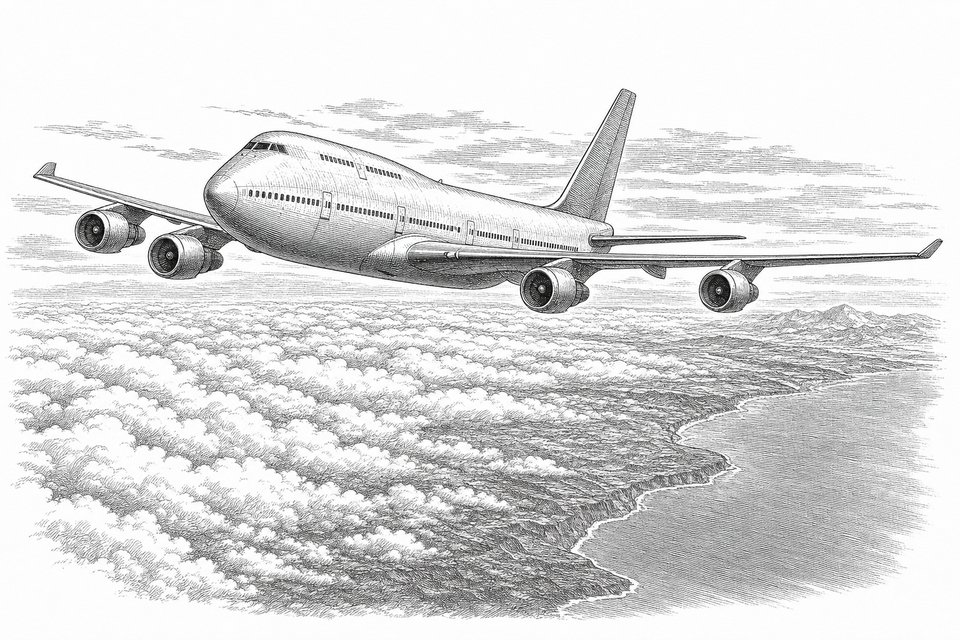
So the journey is two sectors, and the second one is the long one. A first leg of six to eight hours takes you to a hub; a second leg of twelve to fifteen takes you from that hub to an Australian city. Some routings insert a third sector, either because the first leg is a short European hop to reach a larger airport, or because the Australian destination is not the one the long sector serves. Perth, on the west coast, is meaningfully closer than Sydney or Melbourne and occasionally does the whole thing in two.
The practical consequence of a two-sector journey is that the connection is not an inconvenience inside the trip, it is a structural part of it. A missed connection on a European itinerary costs an afternoon. A missed connection here costs a day, because the long sector to Australia typically operates once daily, and the next one is tomorrow. That asymmetry is the single most useful thing to understand before booking anything.
Section 2East or west, and why it matters
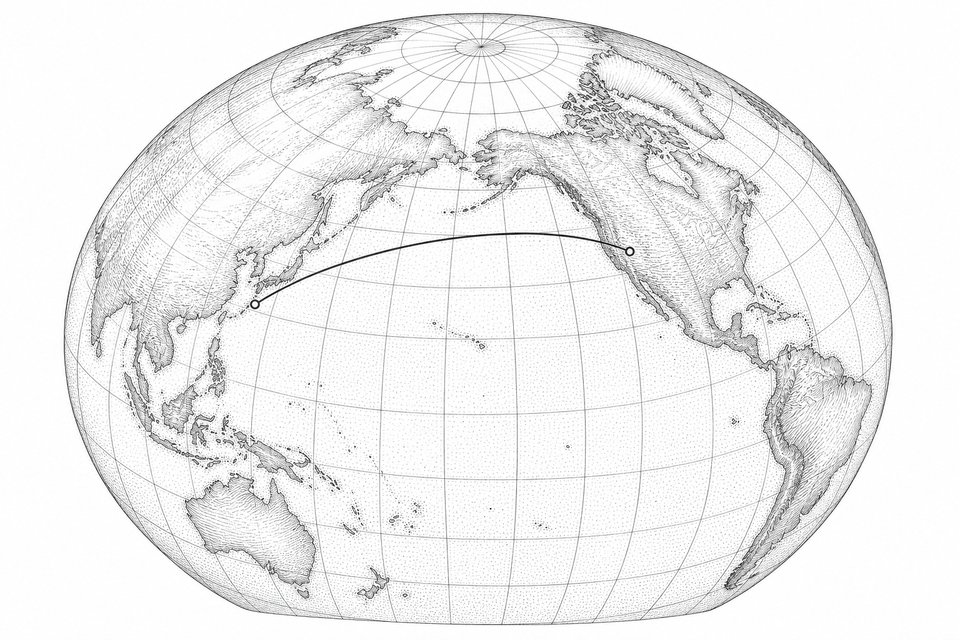
There are two ways round the planet and both work. Eastward means a hub in the Gulf or in Asia, and it is the shorter of the two from Ireland as well as the more frequently served. Westward means crossing the Atlantic first, changing somewhere in North America and then crossing the Pacific, which is longer in the air and inserts a second country's border process into the middle of the journey.
The westward option is not merely the worse one, and it has a genuine Irish advantage. United States preclearance operates at Dublin and Shannon, so the American immigration formalities are completed before departure rather than during a transfer with a suitcase and a deadline. That removes the specific failure most often responsible for a missed connection on that side of the world. Whether it removes enough of it to outweigh the extra hours in the air is a judgement, and it usually depends on where in Australia you are going and what you would do with a stopover.
Eastward, the calculation is simpler and the reason is structural. The hubs on that side of the route exist to connect Europe to Asia and Australasia, which means the onward options are numerous and the timings are built for the transfer rather than tolerated. A connection designed as a connection behaves better than one improvised out of two domestic networks.
One thing to note in either direction, because it is counted wrongly more often than anything else on the itinerary: the date changes. Going east you lose a day crossing the line and get it back coming home. It is not a subtlety of the timetable, it is a whole calendar day removed from the middle of your annual leave, and it belongs in the plan before the flights are chosen rather than as a surprise at the airport.
Section 3How long it takes, honestly
Twenty to twenty-four hours in the air. That figure gets quoted often and it is the least useful of the numbers available, because nobody experiences flight time. What is experienced is door to door, and door to door from an Irish house to an Australian one is twenty-six to thirty hours in the ordinary case.
The journey broken into the parts that actually consume time, for a typical eastbound routing from Dublin.
| Stage | Typical | What decides it |
|---|---|---|
| Home to Dublin airport | 1 to 3 h | Where in Ireland you start |
| Check-in and boarding | 2 to 3 h | Long-haul recommends the longer end |
| First sector | 6 to 8 h | Which hub |
| Connection | 2 to 4 h | Book the longer one, not the tighter one |
| Second sector | 12 to 15 h | Which Australian city |
| Arrival and transfer | 1 to 3 h | Border queue, then the drive |
The connection line is the one worth arguing with yourself about. A two-hour transfer looks efficient on a booking page and it is the reason people miss the once-daily sector that matters. Three to four hours costs an afternoon in an airport lounge and buys the difference between a delayed first leg being an annoyance and being a lost day.
After landing, the arithmetic continues in a way the timetable does not show. A journey that long, across that many time zones, takes most people the better part of a week to recover from properly. That is not a reason to avoid it. It is a reason to count it: the first two days on the ground are not usable days, and a plan that schedules a long drive or an early start into them is a plan that will be abandoned.
The same applies in reverse and rather worse. Westbound recovery, coming home, is generally the harder direction for the body, and it lands on the week you go back to work. Building a buffer day between the return flight and the first morning back is the single cheapest improvement available to the whole itinerary.
Section 4When to go, and the trap in it
The seasons are reversed, which everyone knows, and the consequence is one most Irish itineraries get wrong. The Australian summer runs from December to February, so it coincides exactly with the Irish period when a long holiday is easiest to justify and hardest to book. Peak demand, peak prices, peak crowding on the coast, and in much of the country a heat that is genuinely uncomfortable for anyone accustomed to an Atlantic climate.
The shoulder seasons are the answer, and in Australia they are unusually generous. October and November, or March and April, give most of the country the weather people imagine when they picture the place, without the December pricing and without the crowding. The exception is the tropical north, where the wet season runs roughly November to April and the sensible window is the opposite half of the year.
This is the same structural point the site makes about long-haul destinations from Ireland generally: the month is a harder constraint than the fare, because a fare can be worked around and a season cannot. A trip in the wrong month to the right place is a worse trip than the right month to a second choice.
Section 5What it costs, counted in days
The money is a moving number and this page will not pretend otherwise. The cost that does not move is time, and it is the one that decides whether the trip is a good idea.
Count it properly. Two travelling days out, two back, allowing for the date line and the arrival that lands mid-morning after no sleep. Two days at the far end that are nominally holiday and are functionally recovery. That is six days consumed before a single thing has been seen, out of whatever leave you have. On a fortnight, it is approaching half.
Which is why three weeks is the honest minimum, and why Australia is the destination where the difference between two weeks and three is not incremental. It is the difference between a trip that works and one that is mostly transit. Anyone with a fortnight and a fixed determination to go is better served by choosing one region and staying in it than by attempting the east coast as a tour.
The internal distances are the second half of this and they surprise people. Sydney to Perth is longer than Dublin to Cairo. Melbourne to Cairns is a five-hour flight. Australia is not a country that can be crossed on a whim between destinations, and an itinerary with four internal flights in it has quietly added another travelling day and another round of airport time to the total.
Section 6The stopover is free, and mostly wasted
The hub in the middle is already paid for. On most eastbound routings the connection can be extended to a night or several at little or no additional airfare, and the traveller who does not ask usually gets the two-hour version by default.
Whether to take it depends on which problem you are solving. A stopover of one or two nights breaks the journey and reduces the arrival damage, which for anyone who sleeps badly on aircraft is worth more than the sightseeing. A stopover of three or four is a second short holiday inside the first, at the cost of days that were already scarce.
The version worth avoiding is the accidental one: a nine-hour connection that is too long to sit through and too short to leave the airport for. That is the worst of both and it arrives by not choosing. Either keep the transfer tight enough to be a transfer, or long enough to be a night in a bed.
Section 7Before you book
The travel authority. Australia requires an approved authority to travel before departure, for essentially every visitor. There is more than one class of it and the class that applies depends on your passport and your reason for travelling. The Australian Department of Home Affairs sets all of it and publishes it, and that is the only source worth reading, for the same reason this site gives about checking a licence against the regulator rather than against whoever is telling you about it. An airline will not board a passenger without one, and the check happens at the departure gate in Dublin, not on arrival.
One ticket, not two. On a journey with a once-daily long sector, a cheap first leg bought separately is a false economy of a particular kind. If the first airline is late, the second one owes you nothing, and the replacement is not a rebooking but a new full-price long-haul fare. The saving is real and the risk is asymmetric.
The cabin bag matters more than usual. Bags miss connections more often than people do, and on this routing a bag that misses one is a bag that arrives a day later, into a country you have just entered. Medication, documents and one change of clothes travel in the cabin. This is generally sound advice and here it is not optional.
Insurance that covers the sector, not the trip. Read what the policy says about a missed connection specifically, because the cost being insured against is not a night in a hotel, it is the replacement of a long-haul sector.
For the flight itself rather than the booking, how to stay comfortable during a long flight covers seat choice, the cabin and the first day after landing, all of which apply to the long sector here more than to anything else in the schedule. For where the departure happens, flying from Ireland covers which airport serves what and how preclearance changes a westbound routing.
Common questions
Is there a direct flight from Dublin to Australia?
No, and there is unlikely to be one. The distance from Dublin to the east coast of Australia is roughly 17,000 kilometres, which is beyond the range of any aircraft in commercial service, and the Irish market is far too small to support the attempt even if range allowed it. Every routing involves at least one change.
How long does it take to fly from Ireland to Australia?
Around twenty to twenty-four hours in the air across two sectors, and twenty-six to thirty door to door once the connection and the transfer at each end are counted. Anyone quoting a single flight time is quoting one of the two legs.
Which is the better direction, east or west?
East, through a hub in the Gulf or Asia, is the shorter and more frequently served direction from Ireland. Westward through North America is longer in the air and adds a separate immigration process partway, though preclearance at Dublin removes part of that friction.
How much holiday do I need for Australia?
Three weeks is the point at which the journey stops dominating the trip. Two weeks is possible and most of the second one is spent recovering from the first. On the rule this site uses elsewhere, one week per connection, a two-connection destination needs a fortnight before it makes sense at all, and Australia is large enough to need more than that once you are there.
What is the best time of year to go?
The seasons are reversed, so the Irish winter is the Australian summer. December and January are the local peak, which means the highest prices and the busiest coast. October and November, or March and April, give the same weather in most of the country at a fraction of the demand.
Do Irish passport holders need a visa for Australia?
Yes. Australia requires an approved travel authority before departure for essentially every visitor, and there is more than one class of it. Which one applies, what it costs and how long it lasts are set by the Australian Department of Home Affairs, and their website is the only place worth reading on it. An airline will not board a passenger who does not have one.