Destinations · India · Reference · Last reviewed 11 September 2026
Beach tours in India: how Kerala and Goa are combined
Most India itineraries that promise a beach are really combination routes: a week of monuments or backwaters attached to a few days of coast. This page sets out the shapes those combinations usually take, how long each needs, and what the two coasts are actually like, so the brochure names mean something before you compare them.
It is reference material rather than an offer. Nothing here is bookable and no operator is recommended.
Plate IThe standard combinations
The recurring India beach-combination itineraries, by length and by what they actually join together.
| Route | Length | Shape | What it covers |
|---|---|---|---|
| Spice lands of Kerala | 13 days | Kerala only | Cochin, Munnar, Periyar and the backwaters, with beach time at the end rather than a separate leg. |
| Kerala and Goa | 16 days | Two coasts | The classic pairing. Kerala for backwaters and hills, Goa for the beach half, joined by a short flight. |
| Classic India, Goa and Kerala | 19 days | North plus two coasts | The Golden Triangle first, then south. The longest of the standard shapes and the only one that does not feel compressed. |
| Temples, tigers and Goa | 12 days | North plus one coast | Monuments and a wildlife reserve, finishing on the beach. The shortest way to combine three very different things. |
| Temples, tigers and Kerala | 14 days | North plus Kerala | The same idea with the backwaters instead of Goa, which trades beach for water and greenery. |
| Classic India and Kerala | 12 days | North plus Kerala | Delhi, Agra and Jaipur, then south. Covered in full on its own page. |
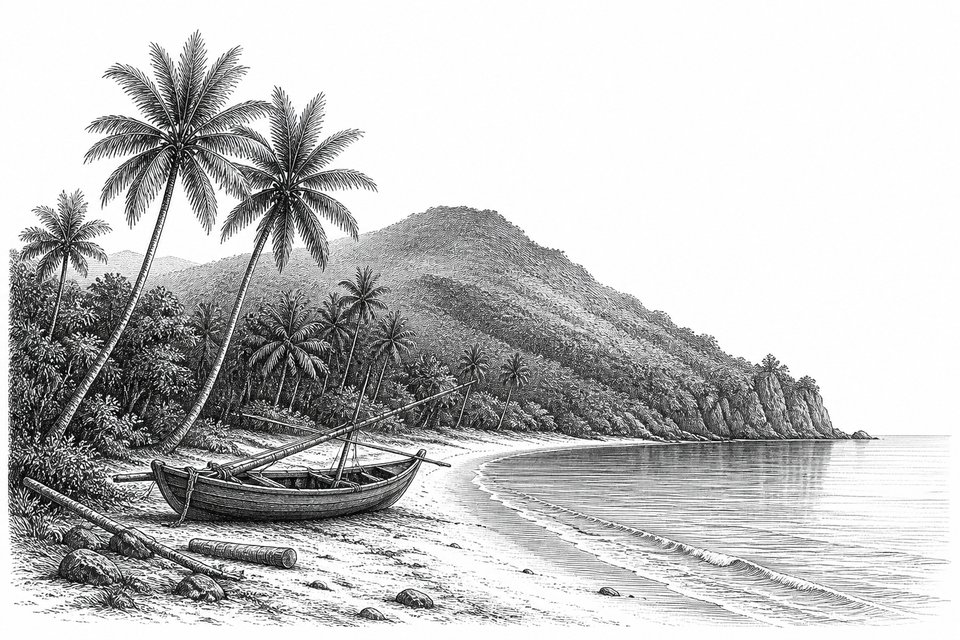
Plate IIKerala or Goa
The two are frequently sold as interchangeable beach halves and they are nothing of the kind.
Goa is the beach destination proper: a long stretch of Arabian Sea coastline with a developed tourism economy, a Portuguese colonial history that shows in the architecture and the food, and a wide spread from very quiet in the south to very busy in the north. If the point of the trip is to lie on sand at the end of it, Goa is the answer.
Kerala has beaches, but they are not why anyone goes. The draw is the backwater network inland, the tea country up in the Western Ghats and a general greenness that has more in common with Southeast Asia than with the rest of India. A Kerala half is slower and wetter and involves more boats.
The practical test: if the trip is for two people who want different things, Kerala and Goa together works better than either twice. If everyone wants the same thing, pick the one that matches and give it more days.

Plate IIIHow long these need
Twelve days is the floor for anything combining north India with a coast, and it is a genuine floor rather than a conservative estimate. The northern leg alone involves several long drives, and adding a flight south to a beach on top of it inside a shorter window produces a holiday spent moving.
Sixteen to nineteen days is where these itineraries stop feeling rushed, which is more annual leave than most people have in one block. The honest alternative is to drop the north entirely and spend two weeks in Kerala or Goa, which is a better trip than a compressed version of everything.
Season is the other constraint, and it is the same for all of these: roughly October to March, set by the southwest monsoon rather than by temperature.
The most common of these routes is set out day by day on Classical India and Kerala. For how India compares with the other long-haul destinations reachable from Irish airports, see exotic holiday destinations.